

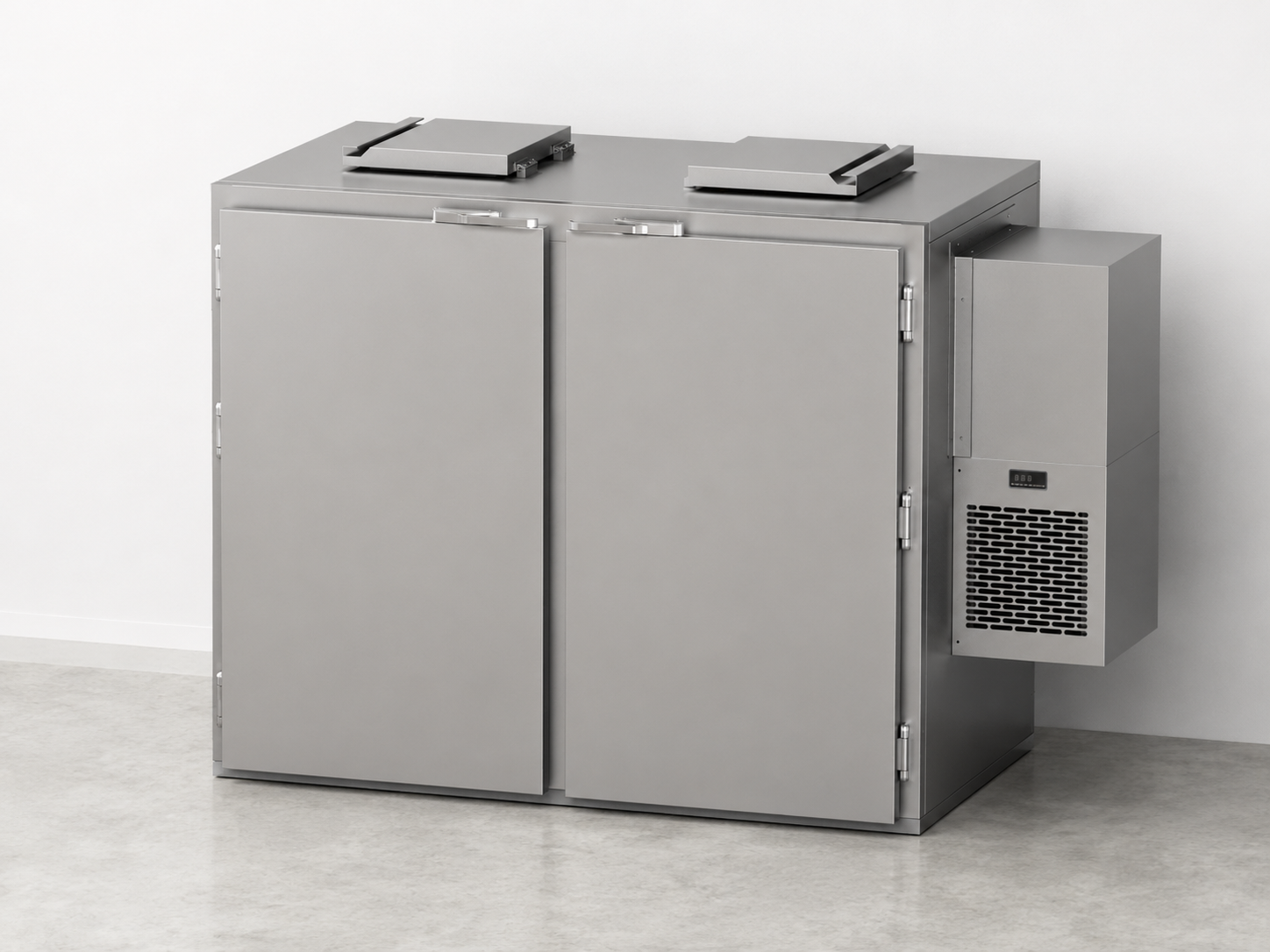
The Ultimate Engineering Guide to the Nayati NFWD 2C 240 Refrigerated Waste Disposal Unit
In the modern commercial foodservice industry, the management of organic waste is just as critical as the preparation of the food itself. For commercial kitchen managers, hospital facility directors, luxury hotel operators, and waste management planners, controlling the hygienic environment of a facility is a top priority. When organic waste decomposes at ambient room temperature, it rapidly becomes a breeding ground for bacteria, pathogens, and severe odor issues, which can violate health codes and ruin the guest experience.
This comprehensive technical article provides an expert engineering review of the NFWD 2C 240 L Refrigerated Waste Disposal unit manufactured by Nayati. As a piece of specialized commercial refrigeration infrastructure, this unit is engineered to halt the decomposition process, secure waste safely, and streamline facility operations.
1. Introduction: The Crucial Role of Refrigerated Waste Disposal
Before diving into the mechanical specifications of the NFWD 2C 240 L, it is vital to understand the target application of this equipment.
A refrigerated waste disposal unit is essentially a specialized commercial freezer designed specifically to hold garbage bins. Instead of storing food for human consumption, it stores organic waste—such as seafood offal, meat trimmings, dairy waste, and general wet garbage—at sub-zero temperatures.
By chilling or freezing the waste, the biological decay process is artificially suspended. This achieves three primary goals for a commercial facility:
-
Odor Elimination: Stops the release of volatile organic compounds (VOCs) associated with rotting food.
-
Pest Control: Removes the olfactory attractants that draw rodents, flies, and other pests into the loading dock or back-of-house areas.
-
Sanitation Compliance: Meets strict Hazard Analysis Critical Control Point (HACCP) and local municipal health codes regarding the storage of bio-organic waste.
The Nayati NFWD 2C 240 L is designed to provide Total Food Service Solutions by addressing these exact pain points with robust, industrial-grade engineering.
2. Technical Definitions and Terminology
To fully understand the capabilities of the NFWD 2C 240 L, we must define the core technical concepts used in its engineering and design.
-
Refrigerated Waste Disposal: A thermal-insulated cabinet equipped with a mechanical refrigeration system, specifically sized to house standard municipal garbage bins.
-
AISI 304: A premium grade of austenitic stainless steel that contains high amounts of chromium and nickel, providing outstanding resistance to corrosion, food acids, and chemical sanitizers.
-
Polyurethane Insulation: A dense, foam-based material injected between the stainless steel walls to prevent heat transfer from the outside environment into the cold interior.
-
R404a Refrigerant: A specialized hydrofluorocarbon (HFC) blend used in commercial refrigeration systems to effectively absorb and displace heat, particularly optimized for low-temperature applications.
-
IP44 Protection: An Ingress Protection rating indicating that the equipment’s electrical components (specifically the fan motor) are protected against solid objects larger than 1 mm and against splashing water from any direction.
-
2B Surface Finish: A smooth, highly reflective cold-rolled finish applied to stainless steel that is easy to clean and resists bacterial adhesion.
3. Deep Dive into the NFWD 2C 240 L Specifications
The NFWD 2C 240 L represents a high-capacity, heavy-duty solution for waste management. Below is a detailed breakdown of its core engineering specifications.
3.1. Volumetric Capacity and Dual Compartment Design
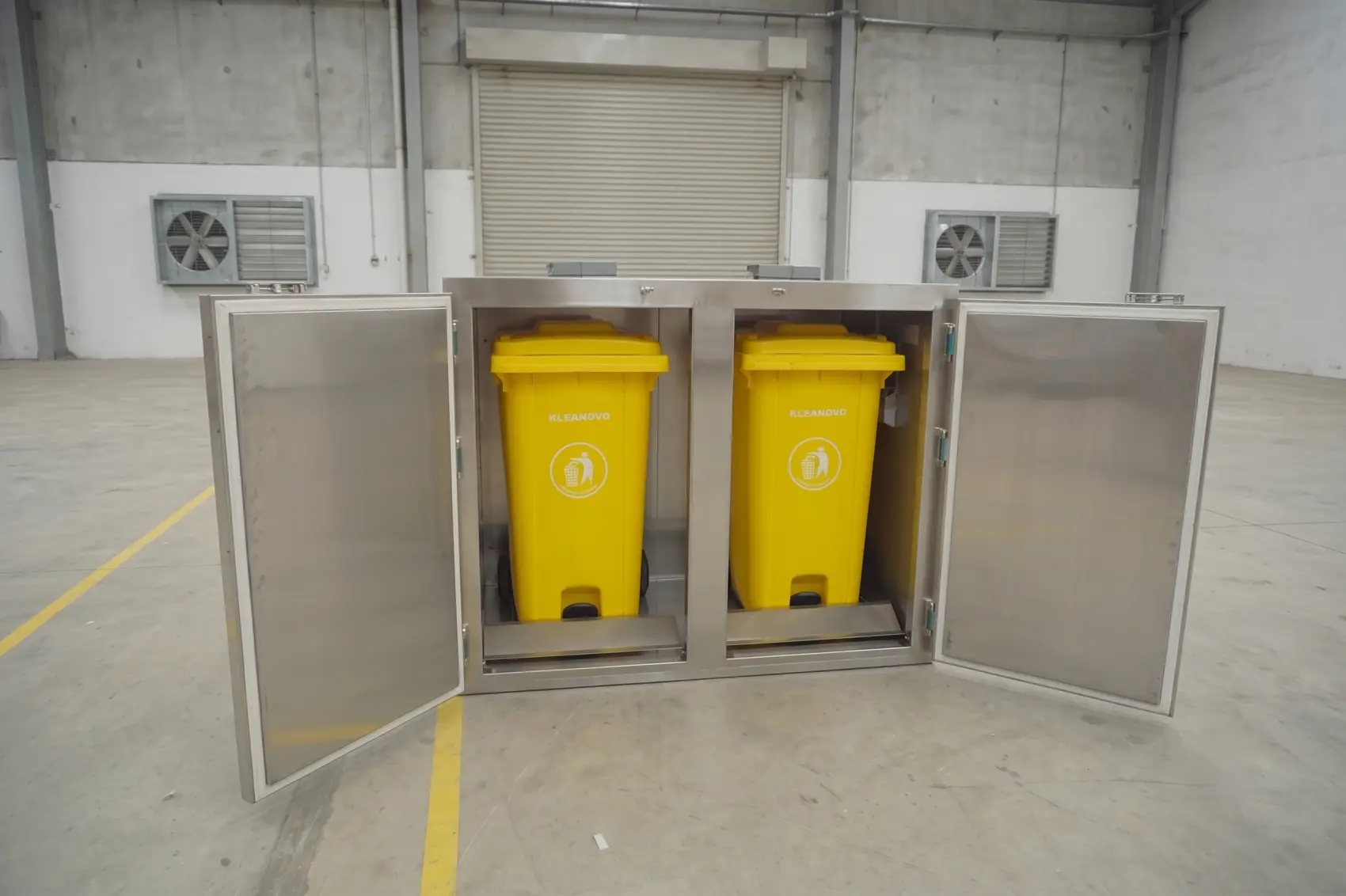
The “2C” in the model name designates a double compartment system. The unit is engineered to simultaneously hold two separate 240-liter waste bins.
-
Total Capacity: The usable internal volume accommodates exactly 2 x 240 liters of waste bins.
-
Included Accessories: To ensure immediate operational readiness, the manufacturer includes two 240-liter yellow waste bins with the purchase of the unit.
-
Other Configurations: For facilities with smaller footprints or lower waste output, Nayati also notes the availability of single-compartment variations, specifically the NRWD 1C 240 L and the NFWD 1C 240 L.
3.2. Temperature Range and Thermodynamic Profile
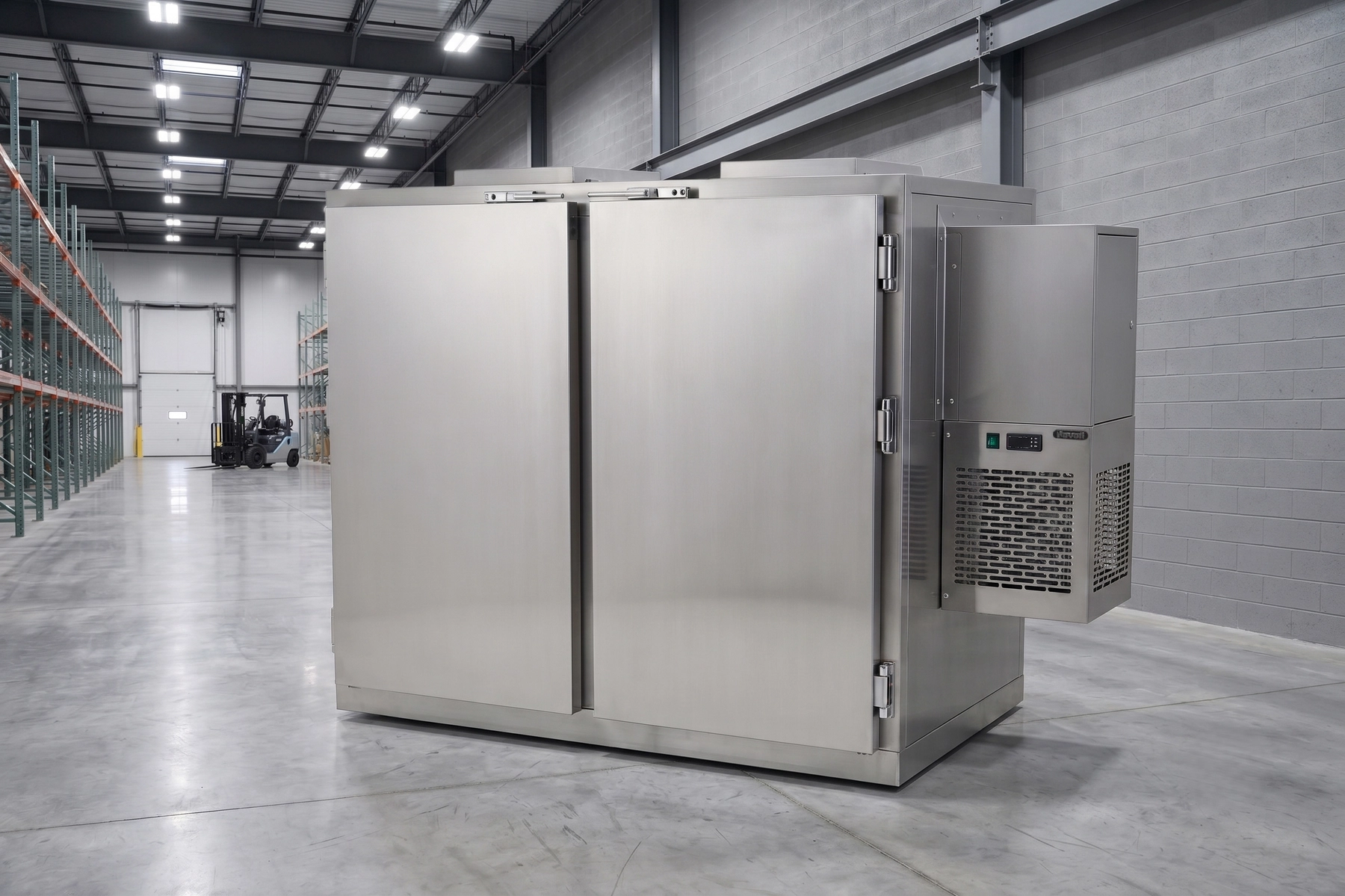
The defining feature of the NFWD 2C 240 L is its ability to operate as a waste disposal freezer.
-
Operating Range: The system is calibrated to maintain an internal operating temperature ranging from -8°C to 2°C.
-
Biological Impact: By dropping the temperature below the freezing point of water (-8°C), the unit ensures that wet waste (like soup bases, sauces, and blood from meat trimmings) freezes solid. This completely locks in odors and stops microbial multiplication. Operating at the higher end of the spectrum (2°C) acts as a powerful chiller, which is often sufficient for short-term daily holding before municipal collection.
3.3. Advanced Insulation Architecture
To maintain sub-zero temperatures efficiently in a hot commercial kitchen or loading dock, the structural envelope must be highly resistant to thermal transfer.
-
Insulation Material: The cabinet utilizes a specialized polyurethane insulation.
-
Density: The polyurethane features a high density of 40 kg per cubic meter, providing excellent structural rigidity and a highly effective thermal barrier.
-
Environmental Considerations: The insulation material is strictly non-CFC and non-HCFC, meaning it does not contain chlorofluorocarbons or hydrochlorofluorocarbons, thereby protecting the ozone layer and aligning with modern environmental regulations.
4. Structural Engineering and Material Science
Waste bins are heavy, abrasive, and often covered in corrosive organic acids. The cabinet housing them must be built to withstand severe industrial abuse.
4.1. Total AISI 304 Stainless Steel Construction
Unlike cheaper consumer appliances that use galvanized steel or plastic, the NFWD 2C 240 L is constructed almost entirely from high-grade alloys.
-
External Construction: The exterior is built entirely with AISI 304 stainless steel, and this specifically includes the back panel, ensuring the unit can be placed anywhere, even in island configurations, without exposing vulnerable materials.
-
Internal Construction: The interior is also constructed entirely of AISI 304 stainless steel.
-
Interior Finish: The internal stainless steel features a 2B surface finish. This smooth finish makes it exceptionally easy to hose out and sanitize if a garbage bag leaks inside the chamber.
4.2. Ergonomics and Ease of Access
Moving 240 liters of wet waste is physically demanding for kitchen staff. Nayati has engineered several features to reduce workplace injuries and streamline the workflow.
-
Flexible Ramp: The unit includes a flexible ramp designed specifically for the easy entry and exit of the heavy waste bins. Staff can simply roll the wheeled bins up the ramp and directly into the chilled chamber without needing to manually lift them.
-
Self-Closing Doors: The unit features self-closing doors equipped with magnetic gaskets. If a staff member has their hands full while pushing a bin, the door will automatically pull itself shut and seal tightly, preventing cold air from escaping and warm, humid air from entering.
4.3. Security and Access Control
Waste theft (such as unauthorized removal of discarded cooking oil or valuable scrap) and tampering are real concerns in urban environments.
-
Individual Locks: The unit includes individual locks for each door.
-
Hardware: A comprehensive door locks kit is included as a standard accessory. This ensures that only authorized sanitation staff or municipal collectors can access the bio-waste.
5. Refrigeration Mechanics and Electrical Architecture
The mechanical heart of the NFWD 2C 240 L is designed for continuous, heavy-duty operation.
5.1. The Cooling Engine and Refrigerant
-
Refrigerant Gas: The system is powered by R404a refrigerant. R404a is an industry standard for low-temperature applications because it maintains excellent thermodynamic stability at sub-zero evaporation temperatures.
-
Refrigeration Output: The system delivers a refrigeration output of 553 W at a -10°C evaporation temperature. This robust output ensures that even when two large, warm bins of kitchen waste are suddenly loaded into the cabinet, the system can rapidly pull down the temperature to the target range.
5.2. Maintenance and Serviceability
Commercial refrigeration downtime can lead to immediate sanitation crises.
-
Pull-Out Engine: A major design advantage of the NFWD 2C 240 L is that the cooling engine can be pulled out for service and maintenance. This allows technicians to clean condenser coils, check refrigerant pressures, or replace components without having to dismantle the entire cabinet or remove the waste bins.
-
Auto-Defrosting: The system features an auto-defrosting system. In sub-zero environments, humidity from the air and wet waste naturally turns to ice on the evaporator coils. The automatic defrost cycle melts this ice periodically, ensuring the refrigeration cycle remains highly efficient without requiring manual scraping by staff.
5.3. Electrical Load and Connectivity Data
Facility engineers must carefully calculate electrical loads when installing new heavy machinery. The data sheet provides precise electrical parameters:
-
Voltage: 230V, 1NPE AC/50 Hz.
-
Connected Load: 750 W.
-
Energy Consumption: 6 kW per 24 hours of operation.
-
Starting Current: 18.5 A. (This is the brief surge of power required to turn over the compressor motor).
-
Running Current: 3.3 A.
-
Recommended Fuse: A 10 A (slow) fuse is recommended to handle the starting current safely without nuisance tripping.
-
Power Cable: The unit comes equipped with an industrial-grade H07RN-F (3 x 2.5 mm) power cable, known for its heavy rubber sheath that resists mechanical damage and water exposure.
5.4. Interface and Environmental Protection
-
Control Panel: The user interface features a digital control system with black/white contrast for ease of monitoring. This allows kitchen managers to verify the internal temperature at a glance.
-
Error Signaling: The interface is equipped with an error signal function, immediately alerting staff if the temperature rises dangerously or if there is a mechanical fault.
-
Motor Protection: The internal fan motor features IP44 protection, ensuring that the damp, often humid environment inside a waste disposal unit does not short-circuit the electrical fan components.
6. HVAC Integration: Managing Heat Emissions
A critical factor often overlooked in commercial kitchen design is the heat displaced by refrigeration units. According to the laws of thermodynamics, a refrigerator does not “make cold”; it removes heat from the inside and pushes it outside.
-
Direct Heat Emission: The NFWD 2C 240 L produces a direct heat emission of 0.88 kW.
Practical Application for Facility Planners:
If this unit is installed in an enclosed garbage staging room, the building’s HVAC (Heating, Ventilation, and Air Conditioning) system must be capable of extracting an additional 0.88 kW of constant heat load. Failure to account for this emission will cause the staging room to become excessively hot, which forces the refrigeration compressor to work harder, consume more electricity, and potentially fail prematurely.
7. Spatial Planning: Dimensions and Installation
Proper spatial planning is required to accommodate the unit and ensure sufficient clearance for door swings and ramp deployment.
External Dimensions
-
Width: 1950 mm
-
Depth: 1000 mm
-
Height: 1357 mm
Internal Dimensions
-
Width: 1480 mm
-
Depth: 845 mm
-
Height: 1170 mm
Weight Profile
-
Net Weight: 176 kg (The weight of the machine itself out of the box).
-
Gross Weight: 246 kg (The total weight of the machine and its protective shipping materials).
Packaging Data
For logistics and receiving dock managers, the shipping crate dimensions are:
-
Width: 1980 mm
-
Depth: 1030 mm
-
Height: 1477 mm
-
Total Shipping Volume: 3.01 cubic meters.
8. Operational Workflows: Practical Examples for Facility Managers
How does the NFWD 2C 240 L actually improve daily operations? Consider these practical scenarios based on its engineering features.
Scenario 1: The High-Volume Seafood Restaurant
Seafood waste begins to emit strong, offensive odors within hours of processing at room temperature.
-
The Workflow: Kitchen staff prep fish and shrimp, tossing the heads, shells, and offal directly into a 240-liter yellow bin.
-
The Application: Instead of dragging this to a hot outdoor dumpster where it will attract seagulls and flies, the staff roll the bin up the flexible ramp into the NFWD 2C 240 L. The system is set to -8°C. The seafood waste is frozen solid, eliminating all odors until the municipal waste truck arrives two days later.
Scenario 2: The Hospital Dietary Department
Hospitals must maintain the highest standards of sanitation to prevent cross-contamination to vulnerable patients. Dietary waste cannot be left in ambient staging areas.
-
The Workflow: Food waste from patient trays is collected and bagged.
-
The Application: The bags are placed in the double compartment system. The AISI 304 interior with a 2B finish ensures that if a bio-waste bag leaks, the hospital sanitation team can easily spray and disinfect the interior of the freezer without fear of rusting the metal or harboring bacteria in porous surfaces.
Scenario 3: Luxury Hotel Banqueting
A luxury hotel hosts a 1,000-person gala. The resulting wet waste from the kitchen is massive, but the loading dock is shared with arriving VIP guests. Odors are unacceptable.
-
The Workflow: As bins fill up, they are immediately locked into the refrigerated waste disposal unit.
-
The Application: The self-closing doors with magnetic gaskets ensure that rushed banquet staff don’t accidentally leave the freezer door open. The individual locks ensure the bins remain secure overnight.
9. Engineering Comparison: NFWD 2C 240 L vs. Standard Ambient Waste Rooms
To justify the procurement of this specialized equipment, facility directors often compare it to simply building a standard room for garbage.
| Feature / Metric | NFWD 2C 240 L Refrigerated Waste Disposal PDF | Standard Ambient Waste Room |
| Bacterial Growth |
Suspended (Operates at -8°C to 2°C) |
Rapid multiplication at room temperature. |
| Material Construction |
AISI 304 Stainless Steel (Internal & External) |
Often painted drywall or standard tile. |
| Pest Attraction | Zero (Odors are locked in and frozen) | High (Attracts rodents, roaches, flies). |
| Accessibility |
Flexible ramp for heavy wheeled bins |
Often requires lifting or threshold crossing. |
| Security |
Individual door locks included |
Relies on general building security. |
| System Maintenance |
Pull-out cooling engine for easy service |
N/A |
| Insulation |
40 kg/m³ high-density polyurethane |
Standard fiberglass or foam board. |
10. Industry Standards, Hygiene, and Compliance
In commercial food service, managing waste is heavily regulated. Utilizing a unit like the NFWD 2C 240 L helps facilities maintain compliance with global standards.
-
HACCP Compliance: Hazard Analysis Critical Control Point protocols require that operations physically separate raw waste from fresh food. By utilizing a dedicated, locked refrigerated unit for waste, cross-contamination is virtually eliminated.
-
Environmental Responsibility: By utilizing Non-CFC and Non-HCFC insulation, operators ensure their facility design aligns with global environmental treaties aimed at reducing ozone depletion.
-
Staff Safety: The inclusion of a flexible ramp adheres to occupational health and safety standards by minimizing the need for employees to lift heavy loads, thereby reducing the risk of musculoskeletal injuries.
The Nayati NFWD 2C 240 L Refrigerated Waste Disposal is a premium, industrial-grade solution for commercial waste management. Engineered by PT. Nayati Indonesia, it directly tackles the severe hygiene, odor, and pest control issues inherent in high-volume foodservice operations.
Its massive capacity, accommodating 2 x 240 liters of waste bins, combined with its aggressive -8°C to 2°C operating temperature range, ensures that biological decay is halted instantly. The total AISI 304 stainless steel construction—internally and externally—guarantees longevity in harsh, acidic environments. Furthermore, thoughtful ergonomic engineering, such as the inclusion of a flexible loading ramp, self-closing magnetic doors, and a pull-out cooling engine for easy maintenance, proves that this unit is designed with the daily realities of facility management in mind.
For operators looking to maintain impeccable sanitation standards, secure their bio-waste with individual locks, and invest in eco-friendly Non-CFC/HCFC insulated technology, the NFWD 2C 240 L stands as a definitive, highly capable infrastructure choice.