

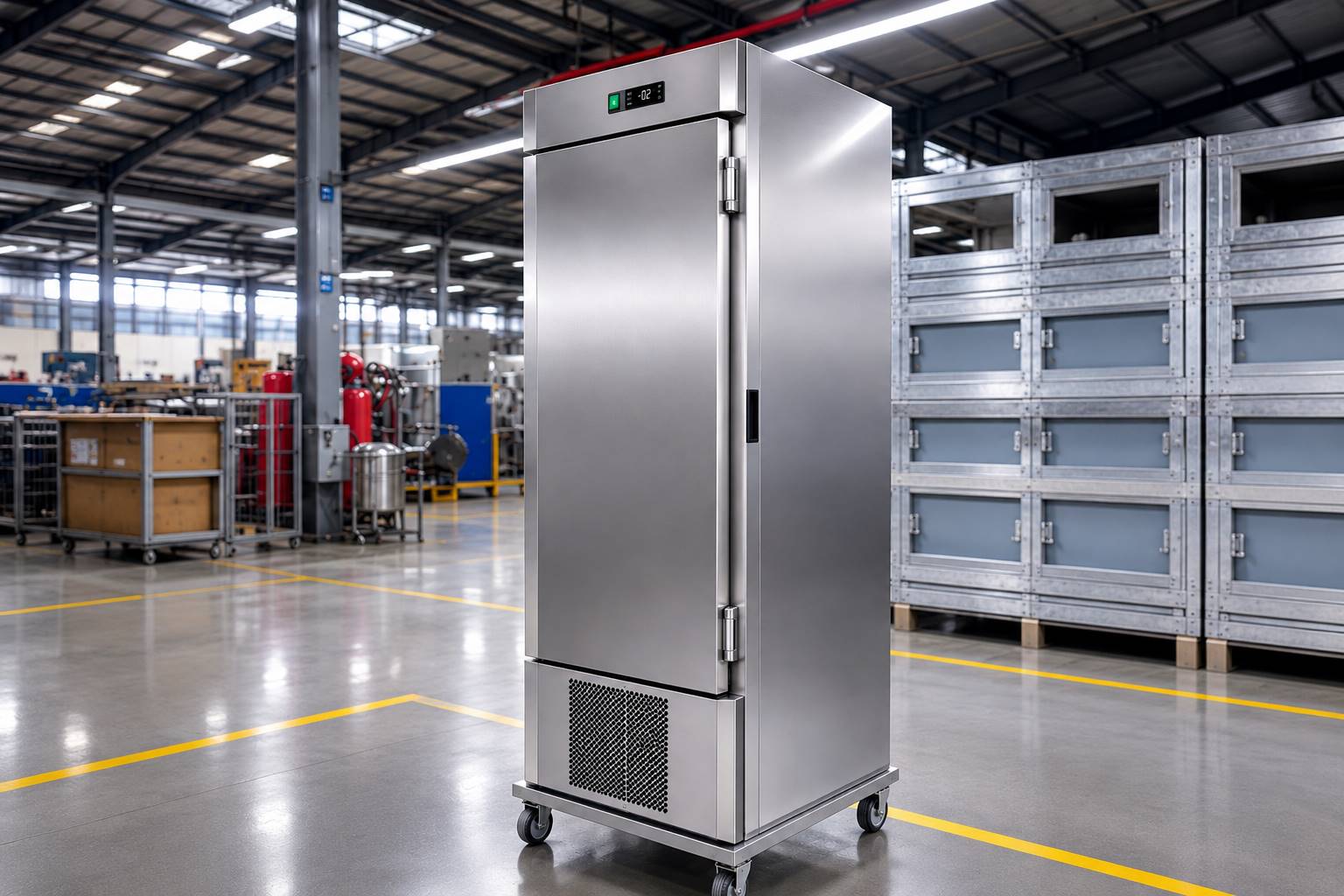
The Engineering Review of the Nayati NEBT 700R Electric Modular Banquet Trolley
In high-volume hospitality operations, the bridge between culinary prep and service execution is where food quality and safety are most vulnerable. For banqueting managers, hotel executive chefs, convention center operators, and large-scale caterers, maintaining the structural and thermal integrity of pre-plated dishes at scale is a complex logistical challenge.
This technical analysis evaluates the Nayati Electric Modular Banquet Trolley, model NEBT 700R, based on its official technical product data sheet (dated 2017.03.23). We will review its thermodynamic design, structural architecture, electrical configurations, and operational workflows to provide a comprehensive reference for procurement managers and engineering teams.
1. The Operational Challenges of Large-Scale Catering
Banqueting operations require a precise coordination of culinary production and service timing. In a standard operation hosting an event for 500 to 2,000 guests, plating courses simultaneously during service is mathematically and logistically impossible. Chefs overcome this constraint by employing cold-chain staging: pre-plating appetizers, salads, amuses-bouches, and cold desserts hours before the doors open.
However, this staging introduces major operational risks:
-
Thermal Abuse: Leaving temperature-sensitive food items (such as seafood appetizers, dairy-based elements, or raw proteins) at room temperature accelerates bacterial growth within the danger zone (5°C to 60°C).
-
Condensation and Plate Degradation: Standard ambient air can cause condensation on chilled porcelain plate ware, destroying garnishes and wilting delicate microgreens.
-
Logistical Inefficiencies: Transporting hundreds of individual plates from cold rooms to remote banquet halls can cause physical damage, cross-contamination, and rapid heat ingress.
The Nayati NEBT 700R functions as a mobile, self-powered thermal envelope. It extends the reach of the main kitchen’s walk-in chiller right up to the banquet floor service station, ensuring food safety compliance and preserving plating presentation.
2. Technical Definitions for the Foodservice Operator
To evaluate this industrial refrigeration equipment, operators must understand several core technical terms used in the “NEBT 700R.pdf” data sheet:
-
Forced Cooling: A refrigeration method where mechanical fans actively circulate cold air throughout the internal cabinet. This creates a uniform temperature distribution and ensures rapid thermal recovery after the door is opened and closed.
-
Automatic Defrosting: A programmed cycle that periodically melts frost accumulation on the evaporator coils without requiring manual intervention. This maintains optimal heat exchange efficiency.
-
Capillary Refrigerant Flow Control: A static metering device consisting of a long, narrow copper tube with a precisely calibrated interior diameter. It regulates the pressure drop and flow rate of liquid refrigerant entering the evaporator, offering high mechanical reliability due to its lack of moving parts.
-
Stainless Steel 304: A premium austenitic steel alloy containing high percentages of chromium and nickel. It provides exceptional resistance to pitting, oxidation, and corrosion caused by food acids and industrial sanitizers.
-
Insulation Density ($40\text{ kg/m}^3$): The structural compactness of the polyurethane foam core packed between the steel panels. Higher density increases structural rigidity and lowers the thermal conductivity value ($k$-value) of the cabinet walls.
-
Direct Heat Emission: The ambient thermal energy dissipated by the trolley’s mechanical condenser and compressor motor into the surrounding room during operation.
3. Core Technical Specifications: Nayati NEBT 700R
The structural and thermodynamic properties of the Nayati NEBT 700R are engineered for high-demand commercial kitchens. The table below outlines its baseline engineering metrics:
| Specification Category | Parameter | Engineered Metric |
| Volumetric Profile | Storage Room Capacity |
700 Liters |
| Tray Layout System |
Adjustable Vertical Spacing Trays |
|
| Thermodynamic Range | Internal Operating Temperature |
2°C to 8°C |
| Maximum Ambient Tolerance |
Up to 38°C |
|
| Minimum Ambient Tolerance |
Down to 18°C |
|
| Refrigeration Architecture | Cooling Methodology |
Forced-air convection |
| Metering Control System |
Capillary Refrigerant Flow Control |
|
| Integrated Compressor Model |
CAE 9460 Z “G” |
|
| Defrost Management |
Automatic cycle |
|
| Structural Construction | Exterior Panel Material |
Type 304 Stainless Steel |
| Core Insulation Thickness |
60 mm |
|
| Polyurethane Density |
40 kg/m³ |
|
| Total Net Weight |
130 kg |
|
| Electrical Framework | Electrical Rating / Load |
0.93 kW (930 W) |
| Voltage Configuration |
220V / 1-Phase / 50-60 Hz |
|
| Current Requirement |
4.2 Amps |
|
| Integrated Lighting |
25W External Illumination |
4. Thermodynamics & Mechanical Design Analysis
The Refrigeration Circuit and Capillary Control
The NEBT 700R uses a closed-loop vapor-compression refrigeration cycle driven by the heavy-duty CAE 9460 Z “G” compressor. This commercial compressor handles the variable thermal loads caused by loading large batches of pre-plated food.
The system utilizes Capillary Refrigerant Flow Control. In mobile banquet operations, equipment experiences physical shocks, vibration, and tilting during transit over door thresholds, elevator tracks, and ramps. Traditional thermostatic expansion valves (TXVs) contain delicate internal needles, diaphragms, and springs that can lose calibration or fail mechanically over time under these conditions. The capillary tube design contains no moving parts. It relies purely on fluid friction and fluid dynamics to drop the pressure of the liquid refrigerant, making it highly reliable for mobile foodservice machinery.
Airflow Dynamics and Thermal Recovery
A common failure point in mobile banqueting units is stratified or uneven cooling. When 700 liters of cabinet space are packed tightly with cold plates, a static cooling system would create localized pockets of warm air, compromising food safety.
[Evaporator Unit / Fan Assembly]
           │
           ▼  (Active Downward Forced Airflow)
┌──────────────────────────────────────┐
│  [Tray Level 1] -> [Plated Salads]   │
│  [Tray Level 2] -> [Plated Starters] │  <-- Uniform 2°C to 8°C
│  [Tray Level 3] -> [Cold Desserts]   │      Air Distribution
└──────────────────────────────────────┘
           ▲
           │  (Return Air Path via Door Plenum)
Nayati resolves this through Forced Cooling. Integrated commercial fans pull air across the evaporator coil and distribute it evenly through the vertical tray stacks. When service staff open the solid door to extract plates, the forced airflow system quickly recovers the internal temperature back down to the 2°C to 8°C operating range once the door is shut.
Insulation and Ambient Performance Boundaries
The unit features 60 mm thick polyurethane insulation with a density of 40 kg/m³. This insulation forms a high-efficiency barrier that blocks external heat from penetrating the stainless steel cabinet.
According to the “NEBT 700R.pdf” data sheet, the unit has a maximum working ambient temperature tolerance of 38°C. This is critical for banquet operations. Service corridors, loading docks, and staging areas behind main event halls often lack climate control and can reach high temperatures due to proximity to dishwashers and combi-ovens. The NEBT 700R’s insulation and condenser design allow it to maintain safe internal holding temperatures even when working in 38°C ambient environments.
5. Engineering Comparison: Mobile Holding vs. Standard Reach-Ins
To help procurement teams make informed decisions, the table below compares a mobile banquet trolley like the NEBT 700R against a standard commercial reach-in kitchen refrigerator:
| Engineering Parameter | Nayati NEBT 700R Banquet Trolley PDF | Standard Commercial Reach-In Refrigerator |
| Mobility Profile |
Heavy-duty casters with reinforced trolley handles. |
Fixed leveling feet or light-duty maintenance casters. |
| Chassis Structural Durability |
Engineered to withstand high physical vibrations, transport bumps, and elevator transitions. |
Intended for static installation inside a kitchen footprint. |
| Internal Rack System |
Adjustable vertical spacing optimized for wide banquet trays and plated sorting. |
Standard wire shelving designed for gastronorm pans or bulk storage boxes. |
| Metering Calibration |
Shock-resistant capillary flow control system for high reliability during transit. |
Often uses TXVs calibrated for constant, static evaporation pressures. |
| Door Security |
Solid insulated door equipped with a mechanical door lock to protect food during transit. |
Standard magnetic gaskets; usually lacks structural door locks. |
| Electrical Load Layout |
0.93 kW load optimized for temporary unplugged transit and quick-connect power sources. |
Variable electrical loads; not optimized for frequent disconnect/reconnect workflows. |
6. Operational Workflows and Practical Examples
To illustrate how the NEBT 700R integrates into high-volume culinary operations, consider the following three practical scenarios:
Scenario 1: Pre-Plated Fine Dining Gala (Hotel Operations)
-
The Setup: A luxury hotel is hosting a 400-guest gala dinner requiring a chilled smoked salmon appetizer.
-
The Workflow: The culinary team pre-plates the salmon starters inside the central production kitchen at 10:00 AM. The plates are loaded onto banquet trays and slid directly into the NEBT 700R. The digital control is set to 4°C.
-
The Transition: At 6:30 PM, the trolley is unplugged and wheeled via service elevators directly to the banquet hall service pantry.
-
The Outcome: The 60 mm thick insulation maintains safe food temperatures during transit. Once stationed in the pantry, the trolley is plugged back into a local 220V outlet. Service staff pull perfectly chilled, pristine plates during service, preventing food wilting or bacterial growth.
Scenario 2: Remote Exhibition Hall Staging (Convention Centers)
-
The Setup: A convention center is hosting a corporate luncheon spread across multiple remote exhibition halls. The central kitchen is located over 300 meters away.
-
The Workflow: Staff prepare individual charcuterie and cheese platters, loading them into multiple NEBT 700R units. The solid doors are locked using the integrated mechanical lock to prevent unauthorized access or contamination while moving through public areas.
-
The Outcome: The forced air cooling keeps temperatures uniform across all trays, preventing cheese sweating and fat separation. The internal 25W lighting system gives staff clear visibility when unloading plates in the dimly lit event areas.
Scenario 3: Cruise Ship Galley Logistical Chains
-
The Setup: A cruise liner needs to serve thousands of multi-course dinners across multiple decks simultaneously.
-
The Workflow: Due to the ship’s constant motion, the kitchen relies on the rugged construction of the NEBT 700R. The shock-resistant capillary flow control handles the physical motion of the vessel without losing refrigeration efficiency.
-
The Outcome: Plated cold dishes remain secure inside the locked, heavy-duty stainless steel cabinet, minimizing food loss from kitchen movement.
7. Food Safety Standards and Regulatory Compliance
For commercial food operations, compliance with food safety regulations is a strict legal requirement. The NEBT 700R is designed to help operators easily meet critical safety benchmarks:
HACCP Integration and Temperature Control
Hazard Analysis Critical Control Point (HACCP) guidelines designate the cold storage of perishable proteins as a Critical Control Point (CCP).
-
Safe Cold Holding: Perishable foods must be held below 5°C. The NEBT 700R features a minimum operating temperature of 2°C, keeping food safely below the hazard threshold.
-
Verifiable Tracking: The digital temperature control panel allows culinary managers to view and log internal temperatures in real-time, providing clear data verification for health inspections.
Material Hygiene Compliance
Health department regulations require food contact and food storage surfaces to be non-porous, easily cleanable, and resistant to microbial growth. The NEBT 700R uses Type 304 Stainless Steel for all exterior and interior panel surfaces. This material prevents food juices and sanitizing chemicals from pitting or scoring the finish, eliminating potential breeding grounds for bacteria like Listeria monocytogenes.
8. Preventive Maintenance Guide for Engineering Teams
To maximize the service life of the Nayati NEBT 700R and maintain its electrical efficiency, engineering teams should follow a structured preventive maintenance routine:
Monthly Tasks
-
Condenser Coil Cleaning: Dust and airborne grease collect on the condenser fins, which increases the unit’s direct heat emission (0.27 kW) and strains the compressor. Clean the coils with a soft brush or vacuum to maintain proper heat exchange.
-
Gasket Integrity Check: Inspect the magnetic door seal on the solid door. Cracks or gaps allow warm ambient air to enter the cabinet, causing rapid frost buildup on the evaporator coils and forcing the 930 W motor to run constantly.
Quarterly Tasks
-
Caster and Handle Inspection: Tighten the structural bolts on the trolley frame and lubricate the wheel bearings. This ensures smooth movement and reduces physical shocks to the internal capillary lines during transit.
-
Drain Line and Defrost Verification: Check that the automatic defrost condensate tray drains correctly. Blocked lines can lead to ice accumulation at the base of the cabinet, reducing storage volume and blocking airflow.
Bi-Annual Tasks
-
Electrical Current Audit: Use a clamp meter to measure the running amperage of the system. It should match the manufacturer’s specification of 4.2 Amps under full cooling load. Deviations can indicate electrical faults or compressor wear.
Summary and Procurement Outlook
The Nayati Electric Modular Banquet Trolley (NEBT 700R) is an exceptionally engineered solution for cold-chain management in high-volume hospitality environments. Its 304 stainless steel build, high-density 60 mm insulation, and 700-liter storage volume provide a durable, high-capacity mobile cooling system.
From an engineering perspective, choosing a Capillary Refrigerant Flow Control system over a mechanical expansion valve shows a clear design focus on mobile reliability. This design decision minimizes operational downtime caused by transport shocks and vibrations. Combined with a forced-air cooling layout and a 38°C ambient temperature tolerance, the unit ensures consistent cooling performance during long service transitions across large event spaces.
For hotels, large caterers, and convention centers looking to protect their food quality, improve plating workflows, and meet strict health codes, the NEBT 700R is a reliable, high-performance investment for modern banqueting logistics.